Solopreneur burnout usually comes from one part of the business. Find which one.
The tiredness feels general, but the cause is usually one habit in one of six areas. A self-check for each, and which fix is a tool, a check or a boundary.

Solopreneurs have the weight of their entire business on their hands, and burnout is real and, unfortunately, common.
Burnout does not always mean you are doing too much. Sometimes it means one part of your business is taking more out of you than the rest.
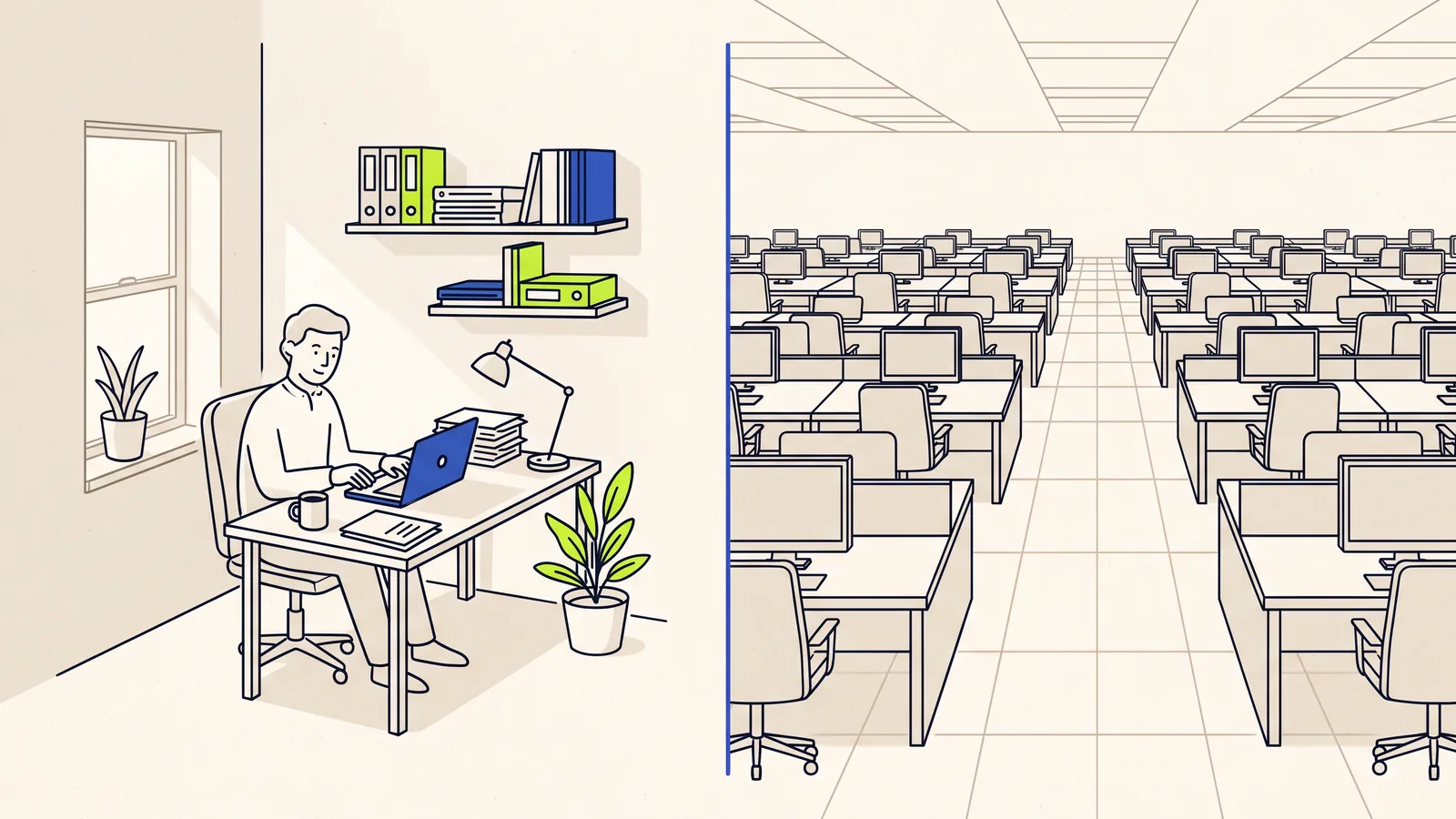
When you work alone, there is nowhere to hide the awkward bits. You are the person making the decisions, doing the work, chasing the money and keeping everything moving. Some days, it can feel like you are running six jobs with one coffee.
The tiredness feels general, but the cause is nearly always a single thing, such as a decision nobody else can make, a task rebuilt by hand every week, a price never said out loud, or a day with no finishing time.
The useful question is not simply "am I burned out?" It is "which part of my business is draining me?"
That is what we look at here. The six areas of running a solo business can each create a different kind of pressure. Once you know which one is wearing you down, you can work on the right problem instead of trying to fix your entire business at once.
That's why the usual advice (sleep more, set boundaries, block your calendar) so often changes nothing. It treats the whole week when the load is sitting in one place.
The World Health Organization describes burnout as a syndrome resulting from chronic workplace stress that has not been successfully managed, and it lists three features, which are feeling drained, feeling distant or negative about the work, and getting less done. It is classed as an occupational phenomenon, not a medical condition, and it only ever refers to work.
We aren't doctors. If you've been exhausted for weeks and a proper break didn't shift it, talk to a doctor before you change anything about the business.
Everything in this article below is about the business habits that create the problems, and how to find the one that is creating yours.
The signs show up in the business before they show up in you
The early signs of burnout often show up in your business before you notice them in yourself. You can spot them in your week without trying to diagnose yourself. Quotes go out late because writing one means making six decisions first.
You cut the price on the phone because pushing back feels harder than losing the money. You rebuild the same supplies list, onboarding email or invoice from scratch every time because you never wrote it down.
You keep the inbox open at eleven at night, even though nothing in it needs your attention. Closing it feels like leaving a job half done. And the work you started the business to do, whether that means baking cakes, teaching lessons or writing code, starts to feel like something you owe rather than something you genuinely enjoy doing.
None of this is a diagnosis.
Each one is a load, and each load lives in a part of your business.
Where the load sits, in six areas
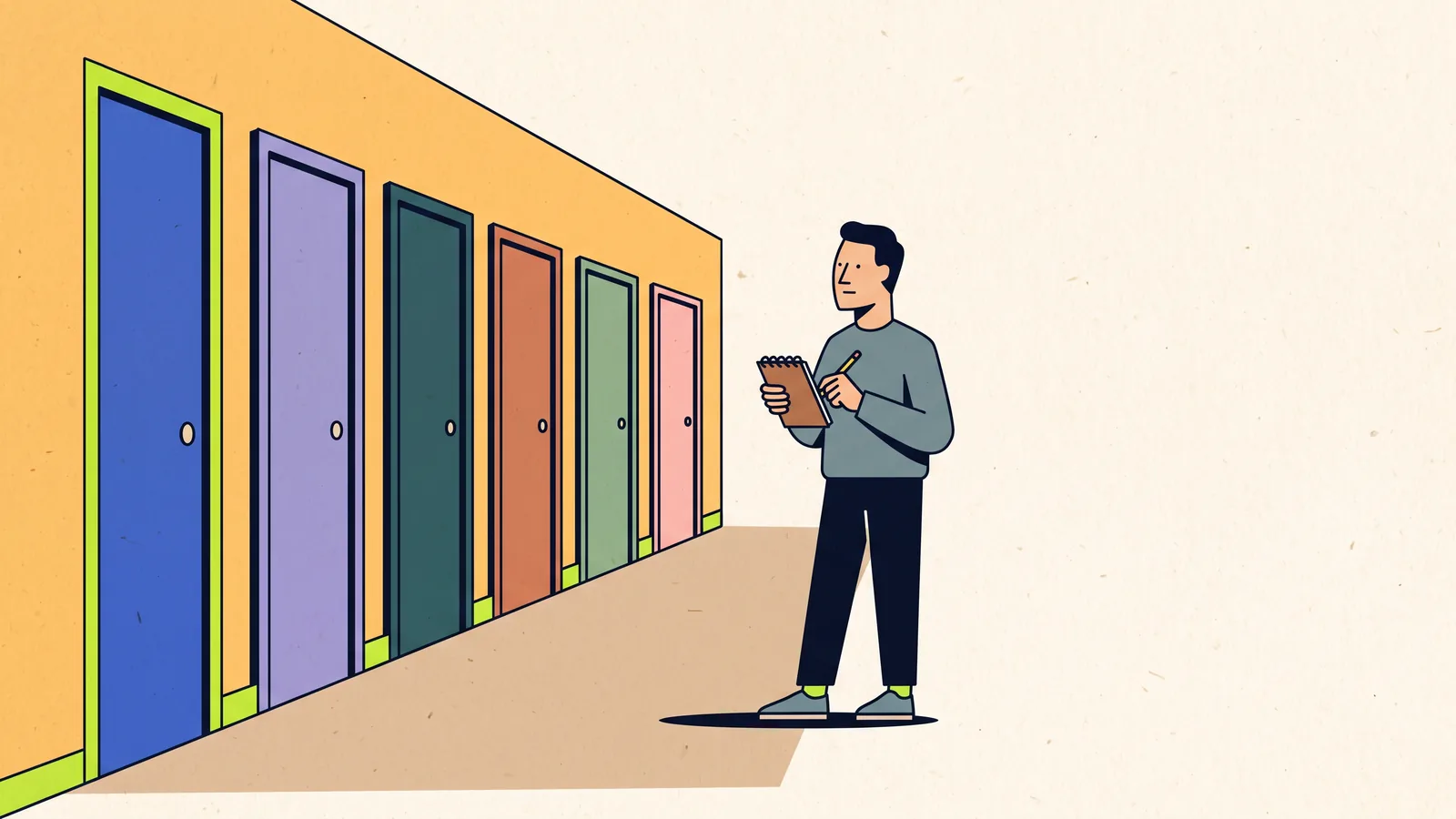
A one-person business has six areas to get right, and Solobility scores habits in each of them: Direct, Design, Delegate, Distribute, Durable, and Develop. Each area asks one simple question. A "no" tells you where to look first.
Do you know where you are going, and do you move without being pushed? That is Direct.
Design determines whether you build systems or just do the work, and Delegate asks whether you can get help from a person, tool or AI, then check the result.
Distribute asks whether you get your work out there and get paid. Durable asks whether you can keep going on your own. Develop asks whether you are getting better faster than the world is changing.
When we looked at the top pages for this search, nine of ten were tip lists or personal essays. None asked the question that matters here, which is: which of these six questions would you answer "no" to?
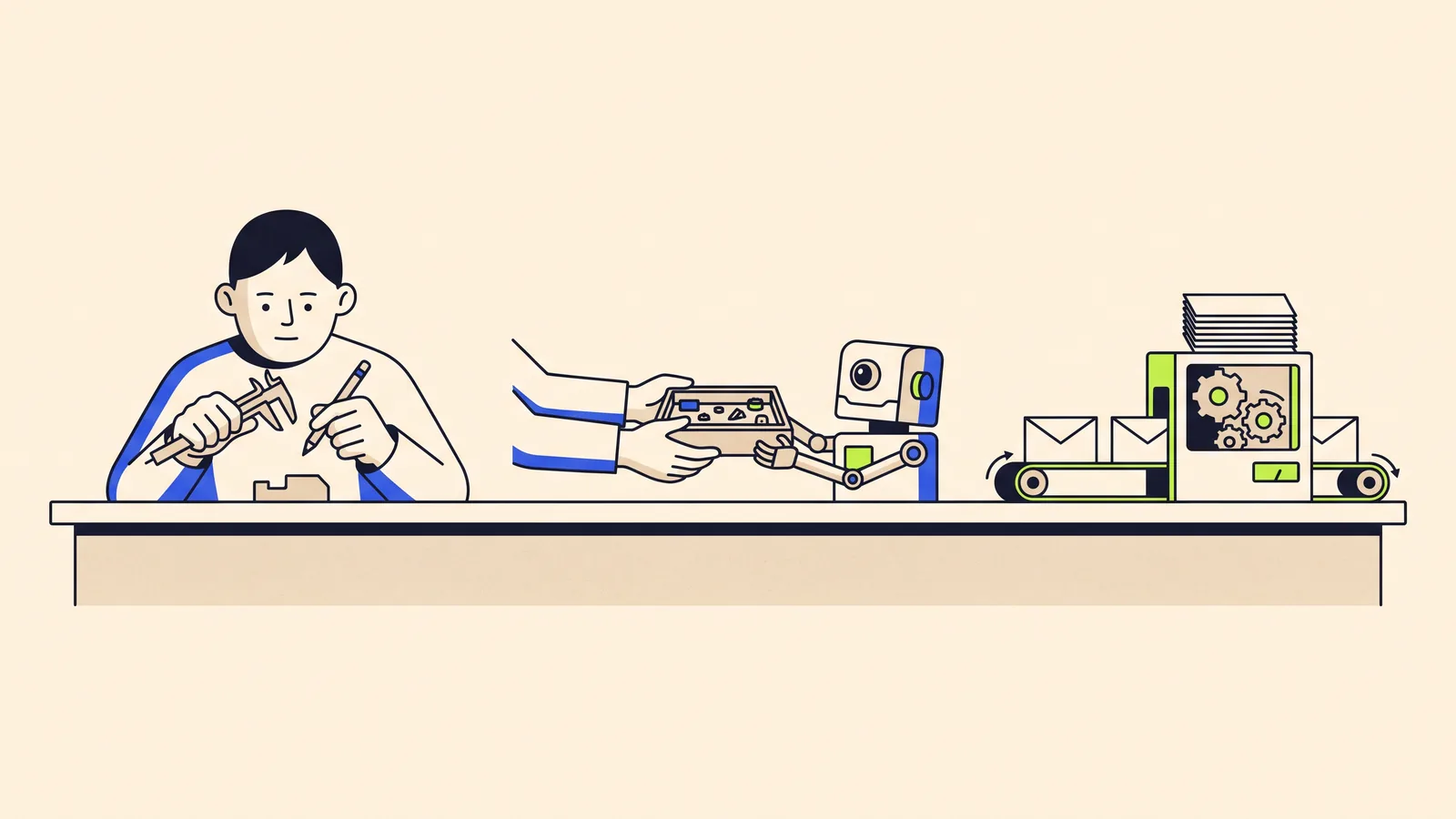
Inside these six areas sit twenty habits, and when we built the hand-off guide we marked each one differently. "Yours to keep" means you carry it whatever help you use, "can be shared" means a person, a tool, or an AI assistant could take part of it, and "can be handed to tools" means software could carry most of it once you've set it up.
You don't need a helper or an AI to score well. The marking says what could be handed off later, if you ever want to, which is a key point in this article.
That marking is the decision rule for this whole piece.
If the habit creating your load is marked as something that can be handed to tools, that's an easy fix. Just set aside an afternoon to set it up. If it is yours to keep, set a boundary that no app can make for you. If it can be shared, give clear instructions and check the result before you use it.
Most burnout advice gets this backwards. It gives you an app when you need a boundary, or a boundary when you need a better setup. No wonder you put in the effort and see little change. See the full model, with every habit and its label, on our framework page.
Direct: every decision comes back to you
In Direct, the load is usually decisions. A lot of them.
You decide which enquiry to answer, which job to take, what to work on this morning, and whether to say yes to a new idea, and you decide most of them again next week because nothing was settled.
All three Direct habits, which are knowing what you are building, getting started, and making decisions, are yours to keep. No tool gets to decide what your business is for.
So if this is your area, software won't help.
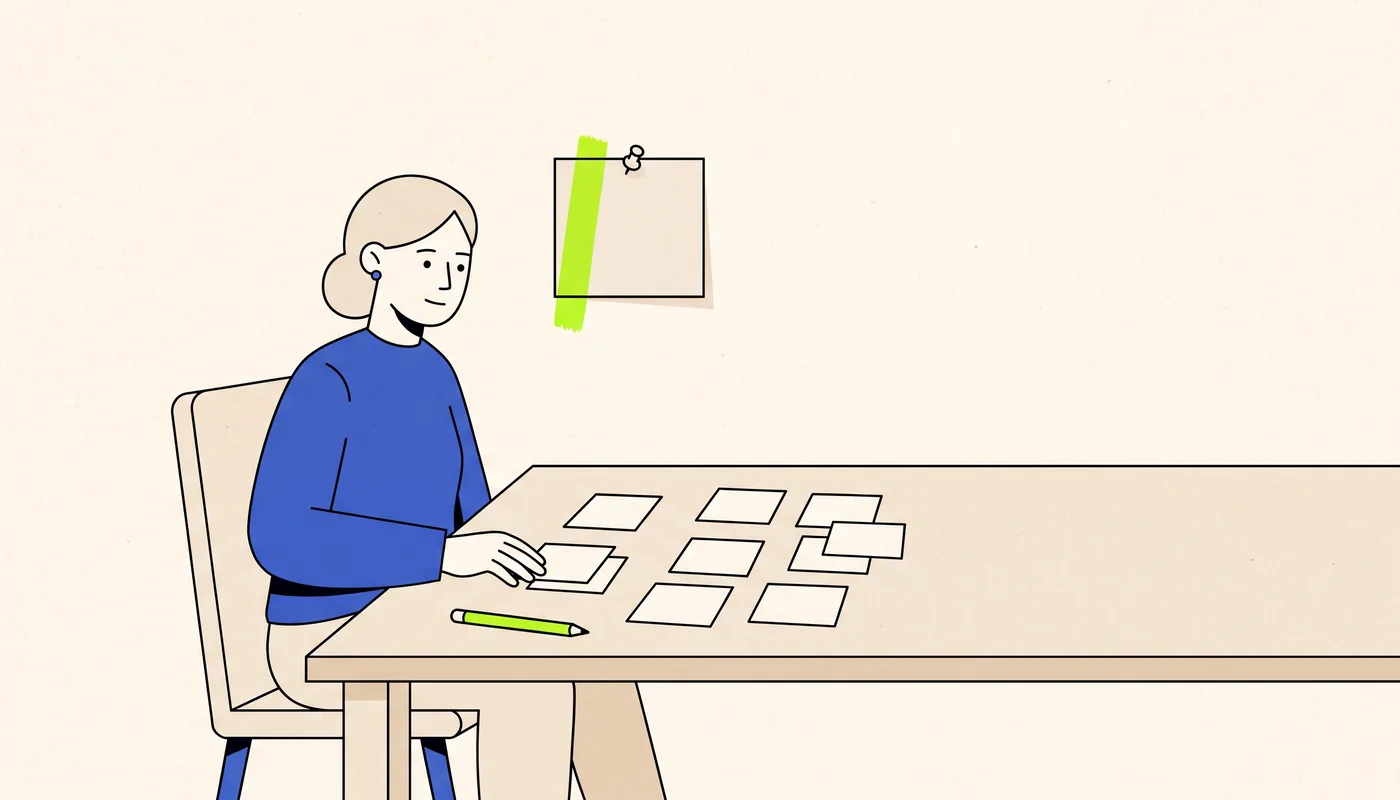
The fix is deciding once and writing it down. When a tutor decides afresh every Sunday which students to keep, which times to offer, and whether to take the new enquiry, the week starts already tired.
However, when the same tutor writes a single sentence about who the lessons are for and one line about which hours are available, most of those decisions are already made.
Here is the self-check for this area. How many decisions did you make this week that you also made last week? If the answer is "most of them", the load is here.
Navigators, whose strongest area is Direct, rarely have this problem, but they have its mirror image. They decide fast and move before the setup exists, then carry the cost of doing the work twice, which is a Design load wearing Direct's clothes, and the Navigator page describes this specific pattern.
Design: the same work is rebuilt every week
The Design load is usually repetition. Nothing is written down, so the tired version of you and the fresh version of you do every job as if it were the first.
This is the one area where a tool can genuinely help absorb a lot of the load. When we rated the twenty habits for hand-off, making work repeatable was one of only two we could mark as can be handed to tools, because a written checklist runs the same on a long tired day as on a good one.
You can use a checklist, template, or saved reply to carry most of a repeated task once you have written it down the first time.
When a cleaner rebuilds the supplies list in the van before every job, the job starts with a small act of effort that a five-line checklist would have removed. The same is true of the photographer who writes the delivery email from scratch each time.
The self-check here is short. Pick one task you do every week and ask whether there is a written version of it anywhere, and if the answer is no, that is the afternoon's work.
Protecting your attention is also a Design habit, but it's yours to keep. If the load is interruptions, the fix is a closed door and a silenced phone for one block a day.
No app can protect your attention. You'll have to do that on your own.
Delegate: you have never handed a habit to a tool
A Delegate load is everything at once, because nothing has ever left your hands. A helper sounds risky, so you do the drafting, the sorting, the reminders, and the first pass at everything yourself.
We get it. It can get overwhelming.
The Delegate habits are mostly yours to keep, which surprises people. Giving clear instructions, splitting work into tasks, and checking before trusting all stay with you, and only learning new tools is marked can be shared. We have written up what a solo owner can hand to AI, what to share and what to keep, habit by habit.
One key phrase we live by is that you hand over work, not responsibility, and the checking is exactly the part that makes handing over safe.
When a designer won't let an assistant draft the quote because a wrong number would be embarrassing, the designer is right about the risk and wrong about the answer.
The answer is a draft from a person, template or AI assistant, built from the designer's price list, followed by a quick check of every figure before it goes out.
Here's a self-check for you in this area. Name one routine task that a person or a tool did for you this month, and if nothing comes to mind, pick the smallest one, describe it clearly, and check what comes back.
Distribute: the money habits are the hidden load
The Distribute load is usually money, and it is the hardest one to see because it looks like everything else. Late invoices, prices set by feel, and not knowing what a month actually cleared all turn into a background worry that follows you around every day.
Two habits matter most here. Naming your price can be shared, and knowing your numbers is the other habit we mark as one that can be handed to tools.
When a florist prices a wedding order by feel, the price often covers the flowers and forgets the hours, and the shortfall arrives as a vague sense that the business is harder than it should be. No amount of sleep fixes a price that was never checked against its costs.
This is the easiest load in the piece to hand over. A tool can track what came in, what went out, and what remains, and your job becomes a ten-minute look on Friday to make sure you understand how the week went.
Naming your price stays with you because you still have to say it. The self-check is simple. Did you state your price this month without softening it? And do you know what you cleared after costs last month?
Nothing should tell you what to charge. The habit is checking the price against your costs and hours, then stating it clearly, whatever the number turns out to be.
Durable: the habits no app can carry
Durable is the area people usually mean when they talk about burnout. Its load is the lack of rest, and no system can fix that. You cannot automate your way out of needing a break.
All three Durable habits are yours to keep. Recovering from hard days, making room for rest, and staying connected can't be set up once and left to run, because they happen inside a person.
IPSE, the Association of Independent Professionals and the Self-Employed, reports that around 10 per cent of freelancers in Britain took no time off in the previous year, and 78 per cent worked while on holiday. No wonder burnout is a thing.

The Durable decision rule is simple. Pick a time to stop work this week, stick to it, then judge the week by whether you did.
Nothing else counts.
Staying connected is often the first thing you drop when work piles up. But having someone to call matters. When a plumber working alone has another tradesperson to call after a bad day, the day ends there. When nobody is there, it can follow them into the next one. Loneliness is common enough among people who work alone that we looked at what the survey numbers say and which habits answer it.
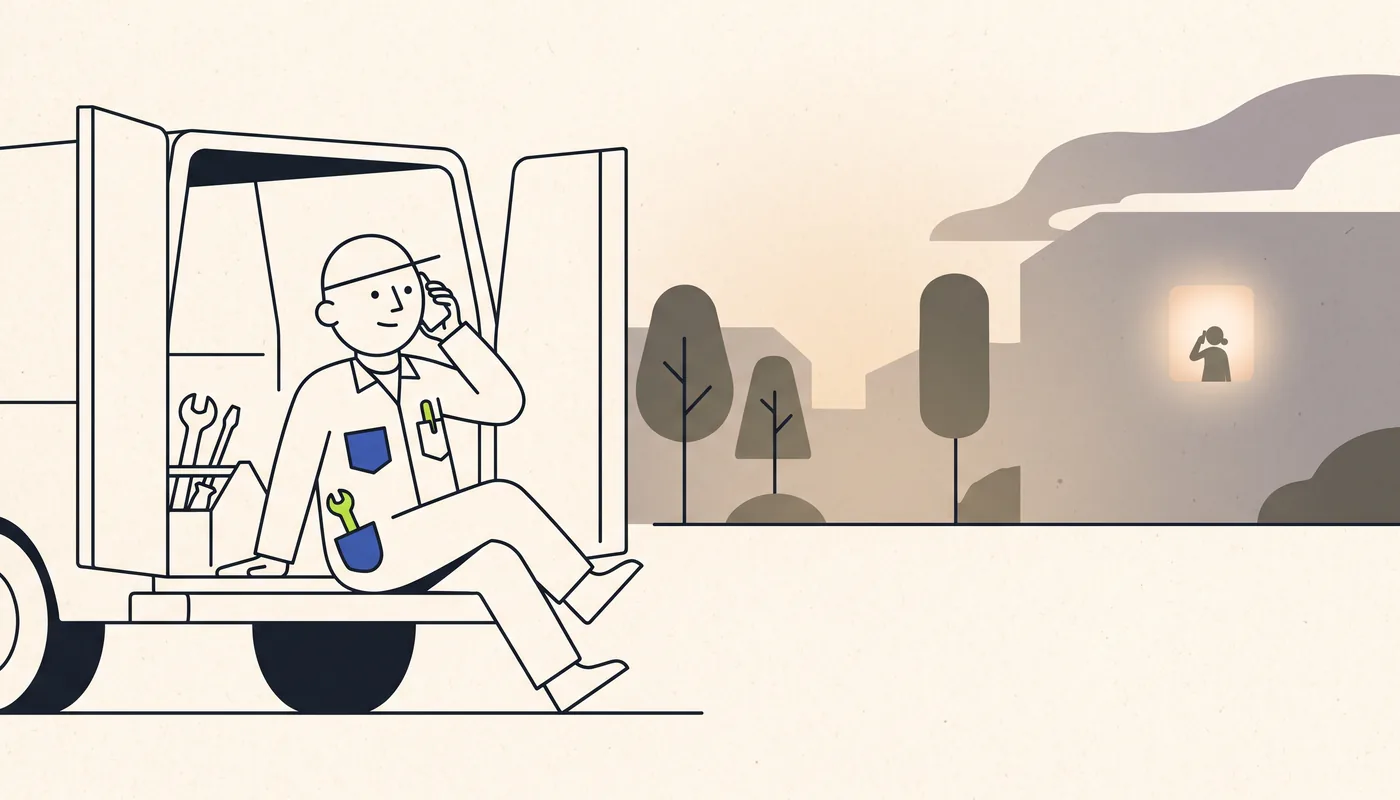
Anchors, whose strongest area is Durable, often have these habits already, but their risk runs the other way. They can stick to a calm routine for so long that they miss when something needs to change. Have a look at our Anchor page, which explains this pattern in more detail.
Develop: usually not the cause, sometimes the reason it lasts
The good news is that Develop is rarely where burnout starts, which is why this section is short.
Develop asks whether you are learning and changing as the business changes. But changing what is not working is yours to keep, and when you are tired, it is easy to stick with what feels familiar, even when it is clearly not working.
The self-check is one question. What did you change in the last month because it was not working? If the answer is nothing, the load in another area is probably being repeated instead of fixed.
How many hours a week should a solopreneur work?
Fewer than you think, and the number matters less than the shape of the week. The US Bureau of Labor Statistics' time use survey found that on days they worked in 2025, self-employed people in the United States averaged 6.14 hours of work, compared with 7.67 hours for wage and salary workers.
That figure covers all self-employed people, including those with staff, and it's an average for the days people worked. It still says something useful, which is that the raw hours of a one-person business aren't obviously higher than a salaried job's.
What is higher is the number of hours the business is in your head. An employee hands the day to a manager at five, and the day is done. In contrast, a solopreneur hands it to nobody, so the work is never quite finished.
Do not start by counting hours. Set a clear time to finish work and protect one full day off each week. Keep that routine for a month, then see whether the amount of work is actually the problem.
Is being a solopreneur stressful? Yes, but often for one specific reason.
Every unfinished decision comes back to the same person. That creates pressure in Direct and a cost in Durable, so the fix usually sits in one of those two areas rather than in your calendar.
When it is more than a business problem
Not every kind of tiredness comes from how you run your business. If you have taken a proper break, kept your stopping time for a few weeks and taken one source of pressure off your plate, but still feel drained most days, it is worth talking to a doctor to rule out any medical issues.
We look at business habits, not health. The World Health Organization's description helps explain the phenomenon, but it is not a checklist to score yourself against. Regardless of what is happening in your business, if exhaustion persists, you might want some medical advice.
Fixing the business can wait. Your health shouldn't have to.
Your next step
Read the six questions again and notice which one you answered "no" to fastest. That is the problematic area, and its hand-off marking tells you whether the fix is a quick one, a clearer instruction, or a boundary.
Write one sentence naming the load, for example "I rebuild the quote from scratch every time" or "I have no finishing time". Then this week, fix that.
Change nothing else yet.
If you would rather see all six areas at once, take the free seven-minute test. It shows your strongest area, the habits that need attention, and which of them a tool could carry.
Then, after you've tweaked your habits, you can retake it in 90 days to see what's changed, hopefully for the better.