Solopreneur or entrepreneur? The difference is how you run the business, not how big you want it
The usual line is ambition. The useful line is how the business is run today, across six areas that apply whether you stay solo or grow.
In the fascinating, yet confounding world of commerce, two terms are often used interchangeably, albeit inaccurately, and they are "solopreneur" and "entrepreneur".
Now, they may sound alike, but they are worlds apart.
Simply put, a solopreneur stays solo, while an entrepreneur builds a business that can grow beyond one person. That often means hiring, raising money or eventually selling. It is a useful distinction when deciding what you want your business to become.
This distinction misses the question you are probably actually asking. If you already run a business on your own, whether you want it to be bigger one day tells you very little about what running it actually looks like this week.
There is a second line to draw, and it is the one we built Solobility around. It looks at how you actually run your business today. Do you have a clear direction? Does the work keep moving without you rebuilding everything from scratch? Can you get help and still keep an eye on the quality? Do you get paid? Can you keep going? And are you still learning?
These simple questions are critical, whether you are running the show alone or managing a staff of fifty. What changes is who it affects.
In this article, we'll look at what really separates a solopreneur from an entrepreneur. You'll see why the usual focus on growth and ambition can miss what matters in your day-to-day business, and how the same six areas can help you understand how you actually run your business today.
Where the usual line falls, and why it is fair
Most comparisons draw the line at what you intend to do next. Will you hire? Raise money? Sell the business one day? If you plan to stay solo, you are often defined by what you have chosen not to do.
That is a fair question when you are deciding what comes next. If you are weighing a bank loan against an investor, or a second van against your first employee, then how big you want the business to become is worth thinking about first.
Entrepreneur tests are honest tools for that same decision. They measure drive to scale, appetite for risk, and the desire to lead others. They measure those things well. We have compared the best-known entrepreneur and personality tests on what each one actually measures.
If you want to know whether running a company of forty people appeals to you, an entrepreneur test can help. That is what the ambition question is designed to explore, and it has its place.
Solo does not mean you are not growing
Most people asking themselves whether they are a solopreneur or entrepreneur are not choosing a path. They are already on one, usually alone, and want to know whether they are doing it well.
Running a business alone is more common than you might think. The UK government's business population estimates for 2025 counted 5.7 million private sector businesses at the start of the year. Of those, 4.3 million, or 75 per cent, had no employees beyond the owners. Staying alone is the ordinary case rather than the exception.
Some of those owners want to hire, but they are not there yet. Many others never will. They went solo because they wanted more control over their time and their work, and adding a team would change both.
Calling that "no intention to grow" reduces a whole business to what you have chosen not to do. Wanting to stay solo does not mean you lack ambition. Staying small is a design choice, and like any business choice, you can do it well or badly.
The line we draw instead: six areas
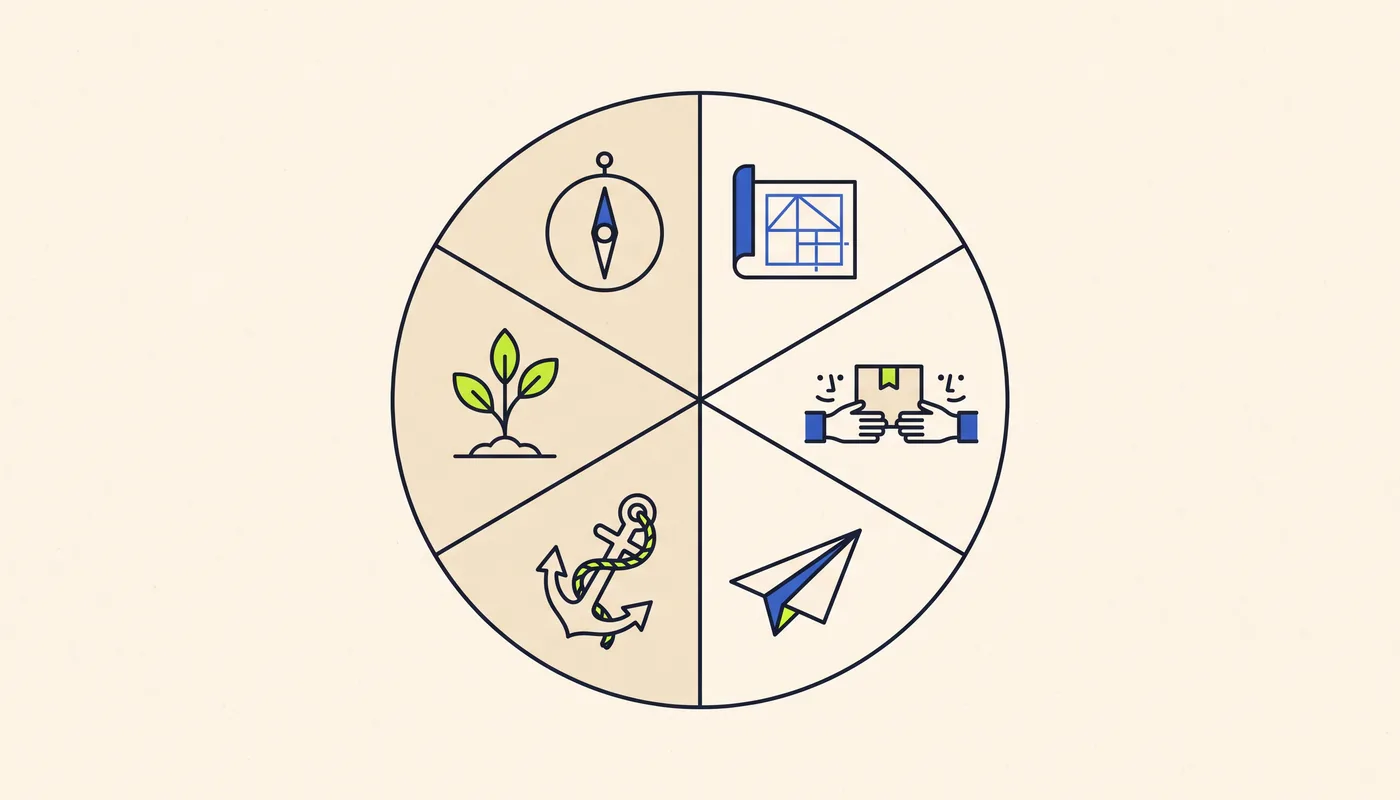
When we score how someone runs a business, we look at six areas, and each one asks a key question.
Direct. Do you know where you are going, and do you move without being pushed?
Design. Do you build systems, or just do tasks? Some people repeat the same work by hand every week. Others set it up once so it runs the same way, even when they are tired.
Delegate. Can you get help, from a person, a tool or an AI, and check it?
Distribute. Can you get the work into the world and get paid? Good work that nobody sees pays nothing.
Durable. Can you last the distance, alone?
Develop. Are you getting better faster than the world is changing?
Read those six again with the founder of a twenty-person company in mind. Way more often than not, they will apply in all cases.
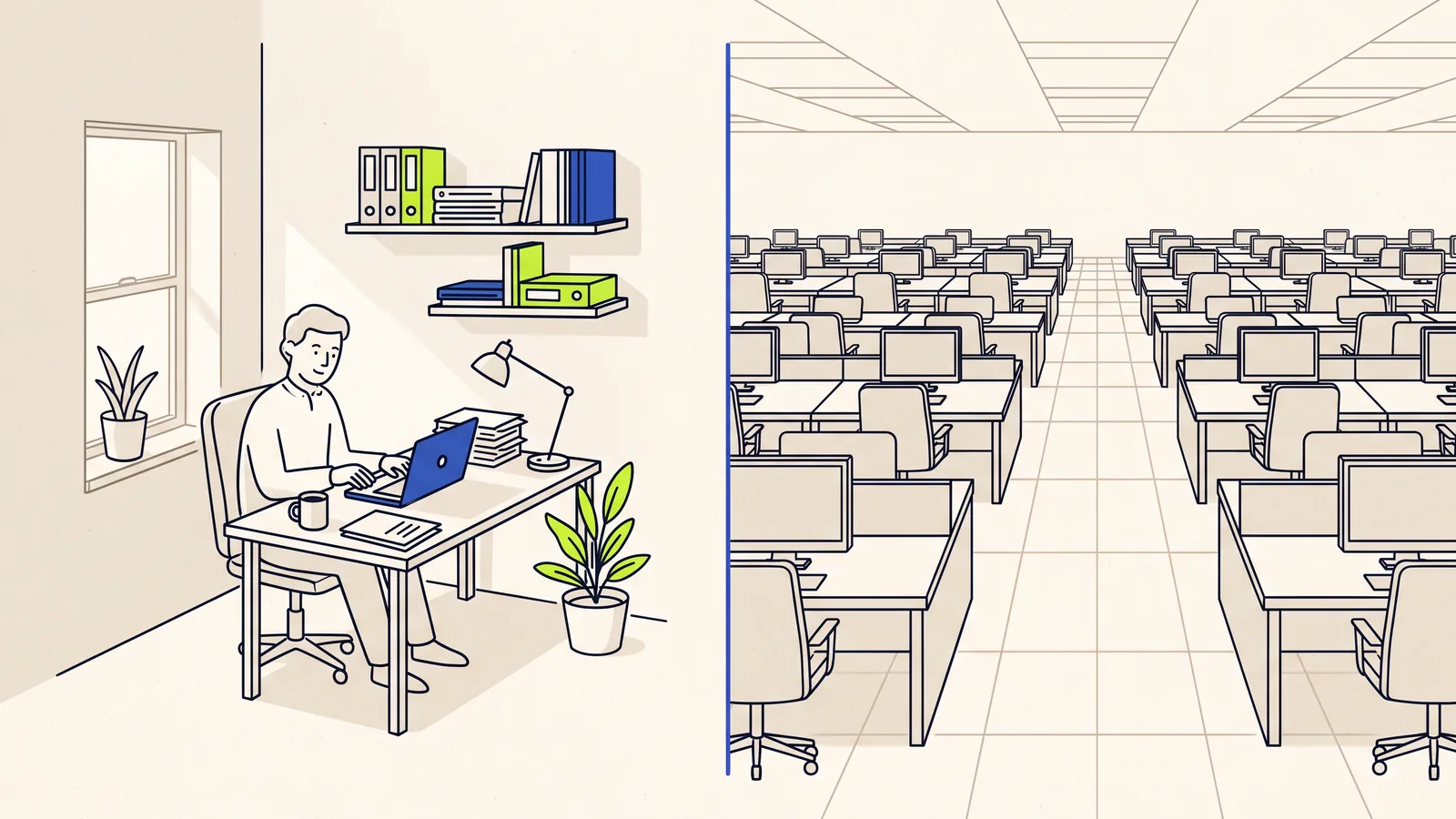
A solopreneur and an entrepreneur need the same six things. The difference is who carries them. In a growing business, you hand areas to people. When you work alone, you carry most of them yourself and can hand smaller tasks to tools.
That is a difference in how you work. And unlike ambition, you can see it in what you actually do on any given day.
Delegate without staff
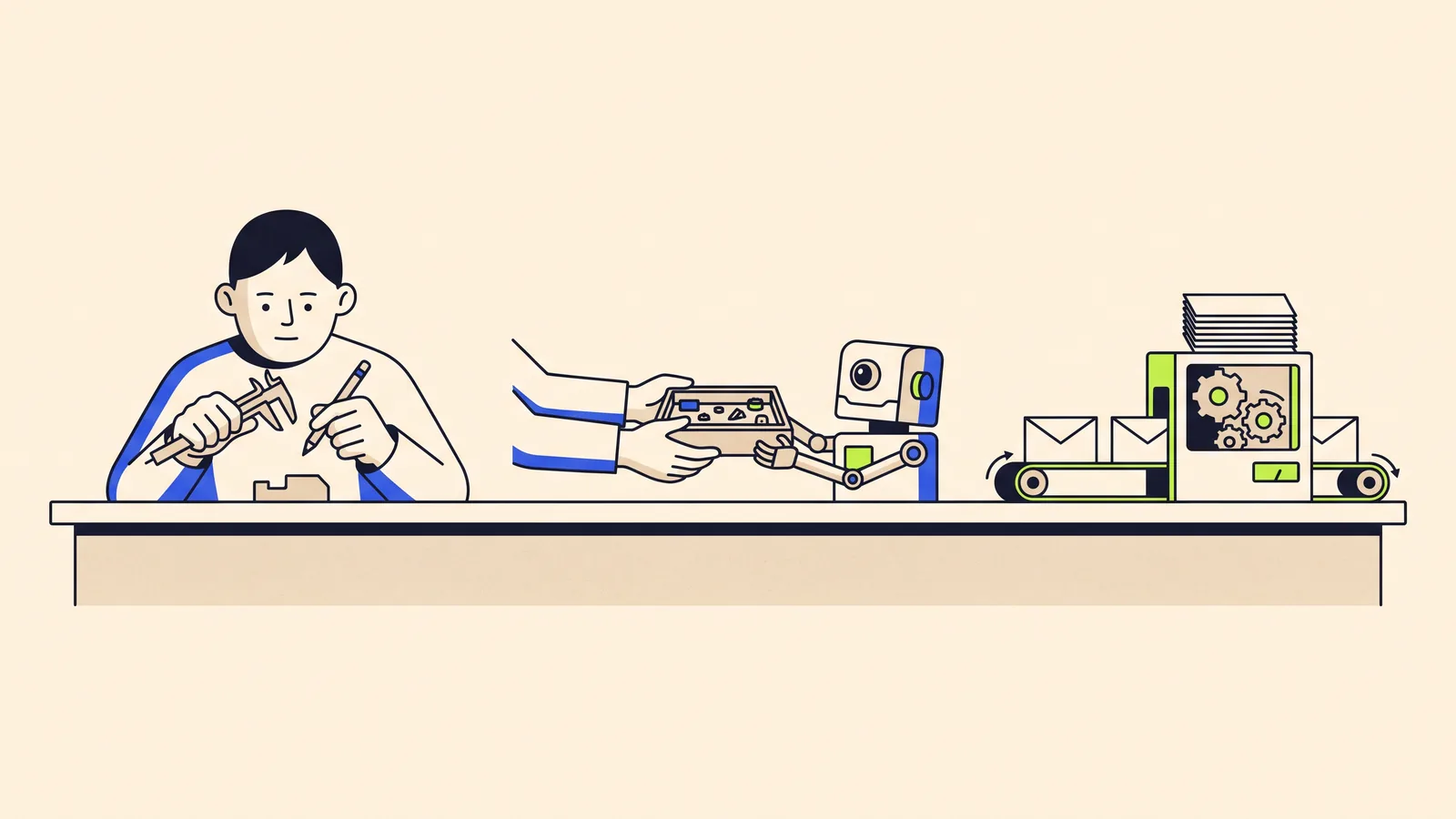
Working solo does not mean doing every job yourself. You can still use people, software and AI to take some of the work off your plate.
Inside the six areas sit twenty habits, and each one carries a note on where it belongs. We mark a habit yours to keep when it has to stay with you, can be shared when a person, a tool or an AI assistant could take part, and can be handed to tools when software could do most of it once you have set it up. You do not need a helper or an AI to score well. The note says what could be handed off later, if you ever want to.
Repeatable work and keeping track of your numbers can be handed to tools. Talking about your work, setting prices and learning new tools can be shared. The full hand-off map for all twenty habits explains why each one lands where it does.
Making decisions, checking the work and managing your own energy are yours to keep. No tool or helper can take responsibility for those.
What can go to a tool are tasks. You need to be able to explain each one clearly, check the result and spot when something goes wrong.
If you cannot do all three, keep the task with you. Hand over the work, but never the responsibility.

When a tutor lets a booking tool send lesson reminders, the sending is work that can be handed to tools, and the process habit is running well.
When the same tutor lets a chat tool answer a parent's question about fees without reading the reply first, a check that is yours to keep has been handed over, and that is usually where the trouble starts.
This is where the two approaches meet. Giving clear instructions, breaking up tasks and checking the result are the same skills you need when you start working with staff. Practising them with tools is good preparation for managing people later.
Is a solopreneur the same as an entrepreneur?
At the risk of oversimplifying things, yes. Anyone who starts and runs a business at their own risk is an entrepreneur, but a solopreneur is one who does it alone, while an entrepreneur might seek to grow the business.
In everyday use, the words have grown apart. "Entrepreneur" often means someone focused on growth. So when people say the two are different, they are usually using that narrower meaning.
You can use the words however you like. Just do not let a label shape how you see your business.
Is a freelancer a solopreneur?
A freelancer sells their time and skills to clients, often one project at a time. That tells you how they make money, not how they run the business.
A freelancer who names a price rather than accepting one, writes down the steps for repeat jobs, knows what last month cost and earned, and decides which work to take is running a business alone, whatever the invoice calls it. A freelancer who takes whatever comes, at whatever rate is offered, with no record of the steps and no view of the numbers, has a job with several bosses.
The title on the business card may be the same. How they run the business is not.
What is the difference between self-employed and solopreneur?
Self-employed is a status. It simply means you work for yourself, whether you are a freelancer, contractor, sole trader or company director.
Solopreneur describes what you do with that status. Every solopreneur is self-employed, but a great many self-employed people run no business in any real sense, because they do the work and get paid, whether or not the next job arrives.
Want to know which one you are? Look at Design and Distribute. Do you have repeatable processes, set your own prices and know your numbers? Those are signs you are running a business, not just working for yourself. If you have not started yet, six questions tell you more about whether you are suited to it than any personality label.
Can a solopreneur become an entrepreneur?
Yes. And the way you run the business does not need to change just because you hire your first person. The same six areas still matter, so the work you built alone still counts.
What changes is who handles the work. Tasks you once did yourself can be shared with someone else, while the things only you can decide and check become even more important.
The same rule applies to hiring or handing work to a tool. You need to be able to explain the task, check the result and spot when something goes wrong. If you cannot explain it clearly enough for a tool to do it, you are probably not ready to hand it to someone else either.
You can move back to a solo business too. If you let staff go and return to working alone, the business has changed, but the same six areas still apply.
Is it better to be a solopreneur or an entrepreneur?
Neither is better. The size of your business is a choice. Running it well is what matters.
Since "it depends" is not an answer, the rule is this. Choose the size of the business by what you want an ordinary week to look like, then judge yourself by how well you run the business.
That is the part you can measure. Solobility looks at how you run your business, not whether you want staff or investors. Wanting to stay solo does not lower your score.
Your strongest area is your style, solo or not
Your strongest of the six areas gives you a Solo Style. Someone strongest in Direct is a Navigator, in Design an Architect, in Delegate a Conductor, in Distribute a Messenger, in Durable an Anchor, and in Develop an Explorer.
Your style shows where you naturally lean, and that can also show where things might go off track. For example, Navigators can move too quickly without a system, while Architects can spend too long perfecting one instead of leveraging it.
Two people can have the same style and run very different businesses. Your style can also change as you change how you work. It reflects how you run your business now. It does not predict how your business will perform.
You can find the full profile for each style, including its strengths and watch-outs, on the styles page.
What to do this week
Take the free seven-minute test. It takes sixty short statements and five choice blocks. There is no account to create, and your answers stay on your device.
Answer based on a typical week, not the week you wish you had. When you get your results, ignore the style name for a moment and look at your weak spots.
Pick one area to work on and practise it for ninety days. Then take the test again and compare your results. You can see all twenty habits and their hand-off notes on the framework page, and why the test is free on the about page.