What a solo owner can hand to AI, what to share with it, and what to keep
Twenty habits, each marked yours to keep, can be shared or can be handed to tools, plus a three-question test for any task that is not on the list.
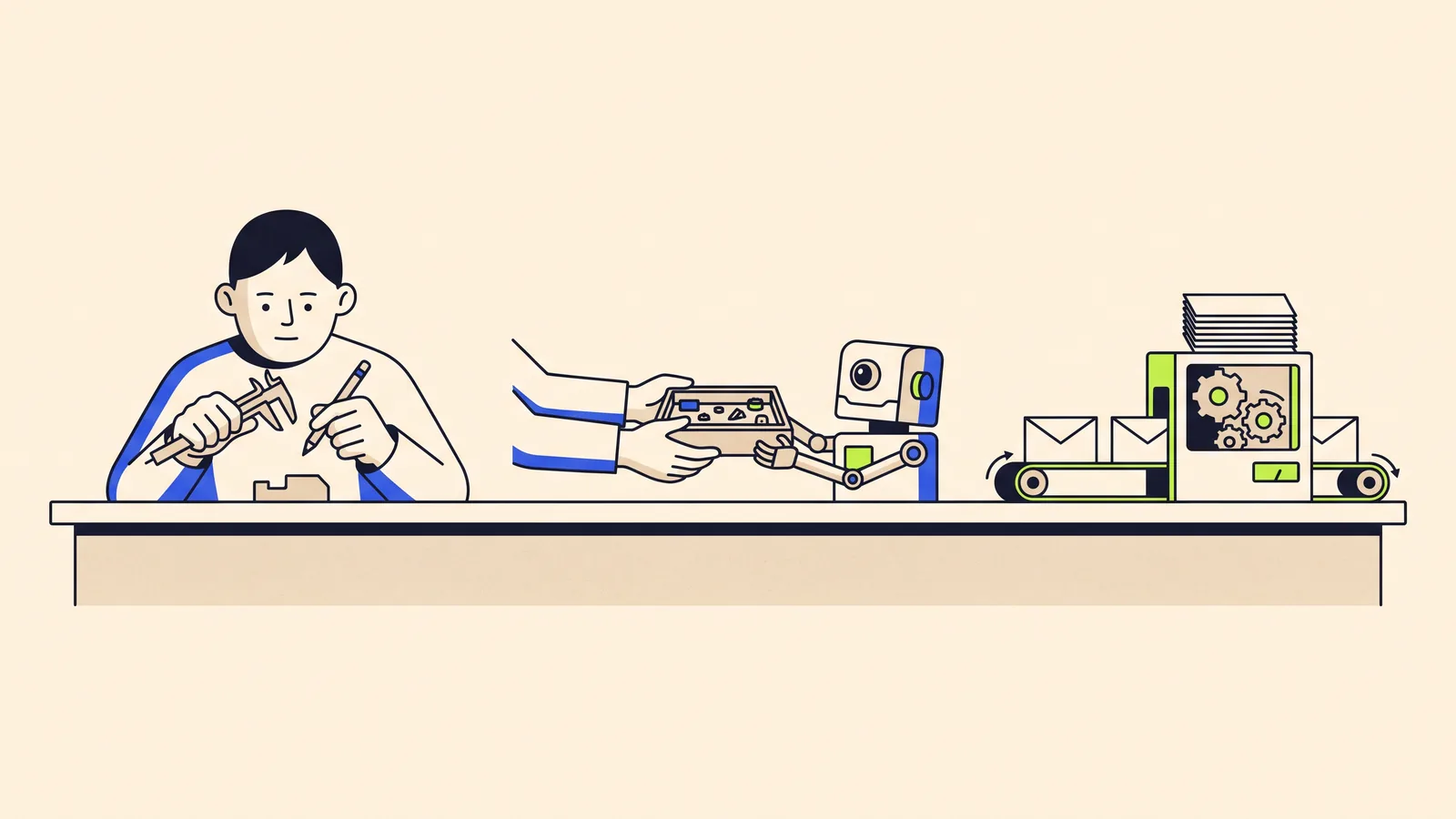
With AI now so firmly ingrained in every aspect of our lives, what can you, as a solo owner, do to leverage this exciting new technology?
Simply put, if a task repeats, can be checked and does not need your judgement, you can probably hand it off to AI.
For example, tracking your numbers, drafting a reminder or sorting notes from a call. You still get the final say, but at least you are not spending Tuesday afternoon doing the same thing for the thousandth time.
Keep the decisions, the final check and your own rest. No tool carries those for you, and the ones that claim to are the ones to be careful with. For anything a customer will read or a price you will name, keep yourself fully responsible. AI can help, but you should decide what goes out.
In this article, we break this down into twenty habits, each marked by what can be handed to AI, what can be shared and what should stay with you. There is also a simple three-question test for any task that is not on the list.
Delegating when there is nobody to delegate to
It's easy enough to delegate tasks when you have a team. Simply hand it over, walk away, and it comes back finished and ready for a final check.
However, when you run a business alone, your team usually is a tool, which does not take responsibility. It simply does the work.
You can hand over the typing, the sorting, and the arithmetic, and you still own the result, because your name is on the invoice and your phone is the one that rings when it goes wrong. That is the whole difference between running solo and running a growing company: the same six things need doing, and you are the one carrying them.
We built Solobility around six areas of a solo business, and one of them, Delegate, is entirely about this. It asks whether you can get help, from a person, a tool or an AI, and check it, and the habits inside it are giving clear instructions, splitting work into tasks, checking before trusting, and learning new tools. The whole model is on the framework page.
The twenty habits and where each one lands
Each habit has a simple label. Yours to keep, can be shared, or can be handed to tools. The question was not whether a tool could do the task. These days, a tool will have a go at almost anything. The real question was whether it could do the job without you noticing when something went wrong.
You do not need a helper or AI to score well. The label simply shows what you could hand off later, if you choose to.
Here is the full list, with the reason for each label.
| Area | Habit | Label | Why it lands there |
|---|---|---|---|
| Direct | You know what you are building | Yours to keep | A tool can describe your business back to you. It cannot want anything for it. |
| Direct | You get started | Yours to keep | Starting is the one thing no reminder can do on your behalf. |
| Direct | You make decisions | Yours to keep | A draft of the options is fine. The choice is yours, and so is the consequence. |
| Design | You see how things connect | Can be shared | A tool can map the steps from enquiry to payment if you describe them. You spot the missing one. |
| Design | You make work repeatable | Can be handed to tools | Once you've written the checklist, a tool can run it the same way on a tired Friday. |
| Design | You protect your attention | Yours to keep | Nothing external switches your alerts off. That is a habit, not a setting. |
| Delegate | You give clear instructions | Yours to keep | The brief is the work. A vague ask produces a confident wrong answer. |
| Delegate | You split work into tasks | Yours to keep | You know which parts need your craft. The tool only sees text. |
| Delegate | You check before trusting | Yours to keep | This is the habit that makes every other hand-off safe. It cannot be handed off itself. |
| Delegate | You learn new tools | Can be shared | A tool can teach you its own features. Choosing which tools deserve your time stays with you. |
| Distribute | You talk about your work | Can be shared | A first draft from your notes is useful. The claims in it are yours to stand behind. |
| Distribute | You go where customers are | Can be shared | A tool can list where likely buyers gather and draft the opening message. You have the conversation. |
| Distribute | You name your price | Can be shared | A tool can lay out your costs and time. Saying the number out loud is yours. |
| Distribute | You know your numbers | Can be handed to tools | Money in, money out, what is left. A tool tracks it well. You still have to read it. |
| Durable | You recover from hard days | Yours to keep | No draft helps here. |
| Durable | You make room for rest | Yours to keep | A calendar block is not rest. Stopping is. |
| Durable | You stay connected | Yours to keep | The people you call after a bad week are people. |
| Develop | You learn by doing | Can be shared | A tool can sort your test notes and suggest what to look at. What the result means is your call. |
| Develop | You change what stops working | Yours to keep | Noticing that the routine has gone stale is exactly the thing a routine cannot notice. |
| Develop | You see yourself clearly | Yours to keep | A tool that tells you how you are doing is telling you what you told it. |
Twelve habits are yours to keep, six can be shared, and two are marked can be handed to tools. The list leans towards keeping on purpose, because the model rates habits rather than tasks, and most habits are about judgement rather than output.
We put it clearly in one line. Hand over the work, not the responsibility.
What "shared" means in an ordinary week
"Can be shared" is the label people misunderstand most. It means someone or something else can do the work, but you still make the final call. That decision is not just a formality.
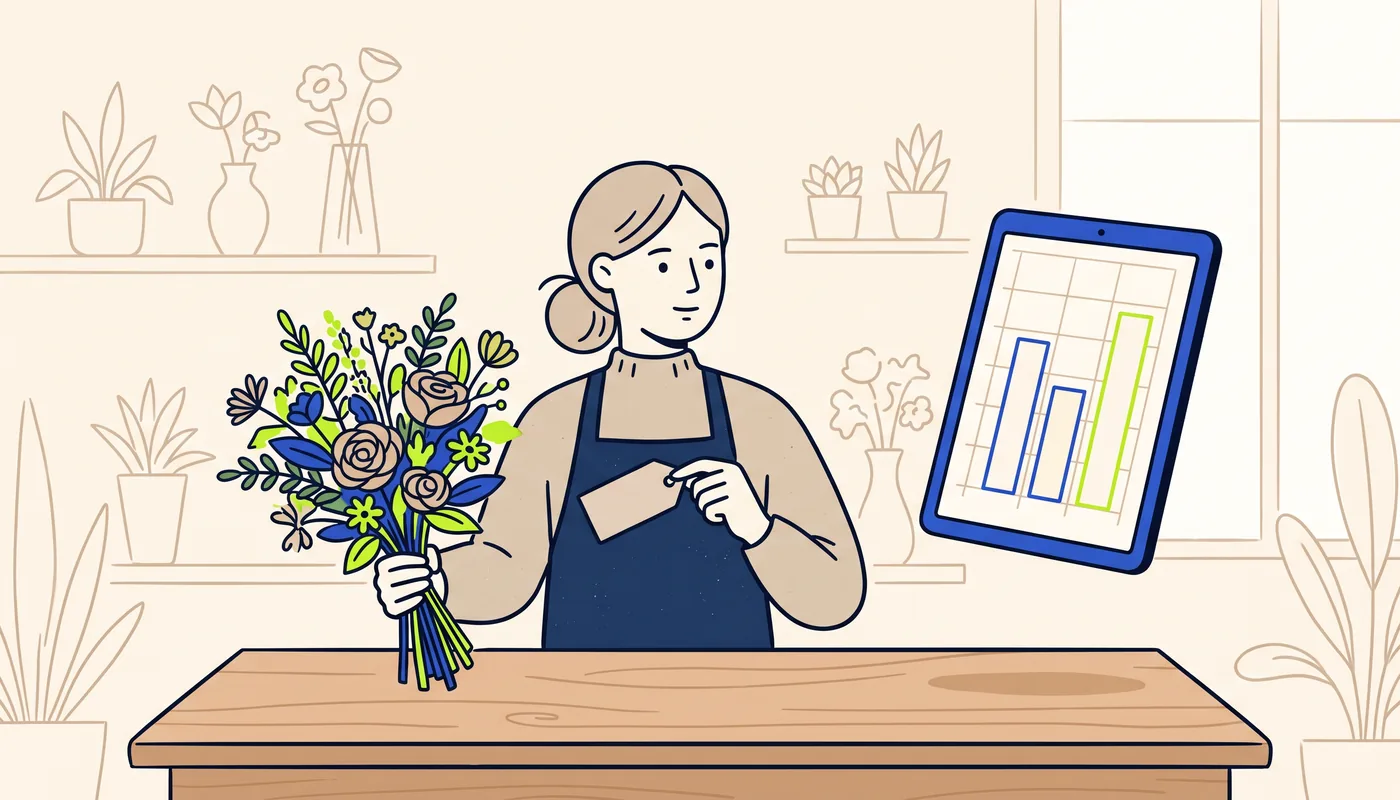
For example, when a florist prices a wedding order by feel, she is carrying the whole habit herself, like costs and margin and the number she says on the phone. When a spreadsheet or an AI assistant lays out the stems, the labour hours, and the delivery run before she quotes, the tool carries the arithmetic, and she carries the price.
That second version is what the can be shared label looks like in practice. The first is yours to keep by default, which is fine, but it is also the version where a busy month can quietly turn into a loss.
The same applies when talking about your work. A helper or tool can draft three short product descriptions from your ingredient list, but you still check every claim before one goes on your shop sign. "Handmade in small batches" is only useful if it is actually true.
Sharing sits between doing the work yourself and handing it fully to a tool. It is where many useful hand-offs belong, but also where a polished mistake can slip through if you do not check the result.
Three questions to classify any task
The list above covers habits, but your week is full of tasks. Most will not appear on the list, so here is a simple rule for deciding where they belong.
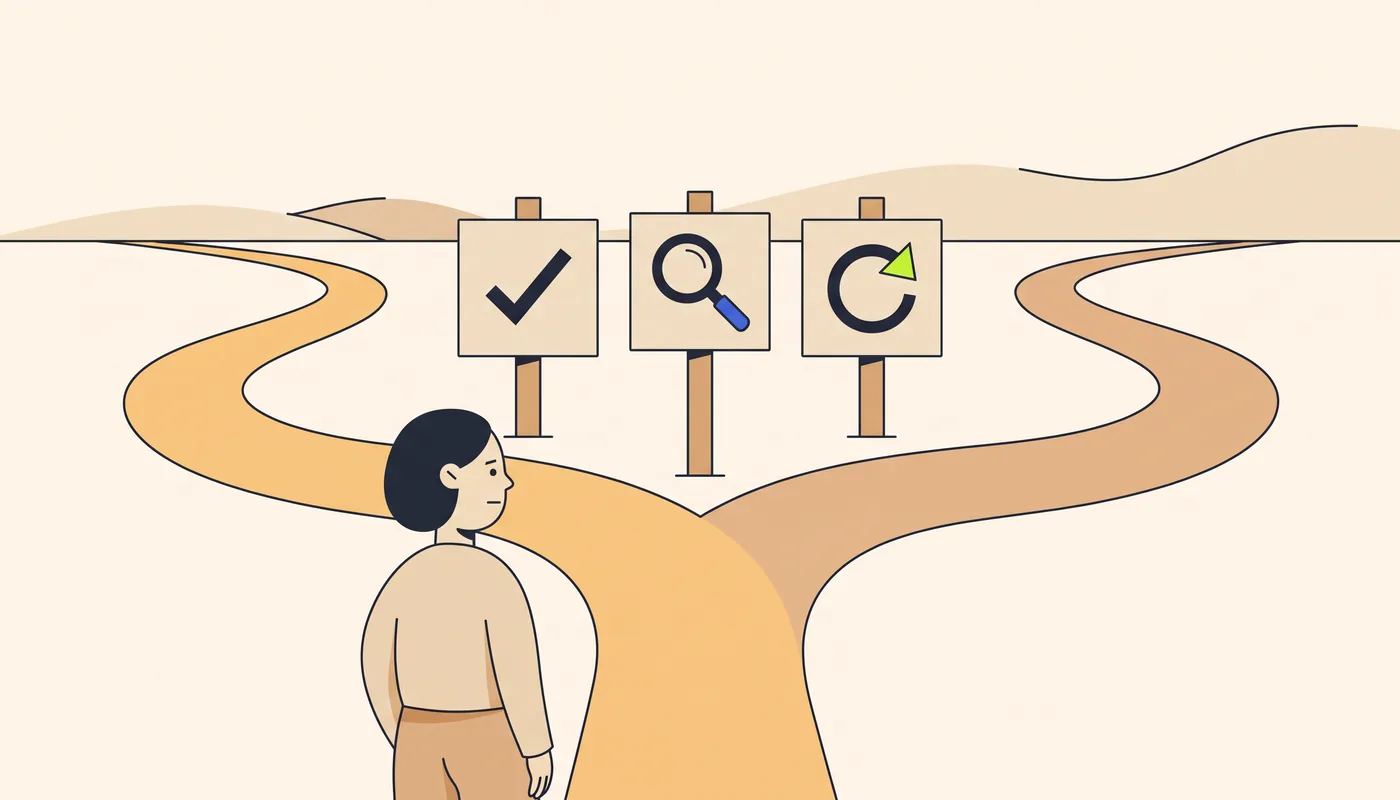
Can you check the result against something outside the tool? You can check a reminder against the calendar or a supply list against the plan. But you cannot check what your customer wants without asking them, so it fails this test.
If the tool is confidently wrong, who finds out first? If you do, before anyone else sees it, the task can be shared. If a customer does, or the bank does, that's your mistake, and the task stays yours to keep until you have built a check that catches it first. The responsibility to catch errors is yours.
Does the task repeat in the same shape? The same closing checklist every night, the same reminder every Friday, the same running total after every sale. Those are the tasks a tool carries well, because the shape does not change and neither does the check.
Three yeses and the task can be handed to tools. Two, and it can be shared, with you reading the output every time.
One or none, and it stays with you, whatever the tool's marketing says.
What to hand over first
Start with the two habits that can be handed to tools. They are the only ones the model marks as safe to hand off, and they are often the tasks solo owners put off the longest.
Knowing your numbers comes first. Set up one tool to track money in, money out, and what remains, then read it once a week, because a running total you never look at is not a habit, it is a subscription.
Making work repeatable comes second. Take the job you do most often, write the five steps you always follow, and let a tool run the reminders and the checklist so a long tired day looks the same as a fresh one.
Ready Solutions, an AI-tool vendor, argues for a different order, which is to automate the task you postpone most, whatever it is, and run one tool for one month before adding another. That rule wins when the thing you dread is also repeatable and checkable, which it often is.
It falls short when the task is naming a price or making a decision. Those are not chores to hand off. They are yours to decide.
Either way, start with one tool at a time. Every new tool means more setup, another cost and another output to check.
What never goes to AI
Three habits stay with you regardless of the fancy tools you have and what they can do.
- Making decisions
- Checking before trusting
- Looking after your own energy
Checking is the part to be stubborn about. Stanford's 2026 AI Index found hallucination rates ranging from 22 to 94 per cent across 26 leading models in a new accuracy benchmark. The test looked at whether models would accept a false belief when a user presented it as their own.
Tell a tool something wrong with enough confidence and many of them will agree with you.
That is the mechanism behind the Conductor's watch-out in our model, which is accepting an answer because it sounds sure, not because you checked it.
Fast Company's rule on the "keep" side is simpler than ours. Anything that goes to a client or has your name attached needs human eyes on it. It is a good rule, and it wins on speed, since you can apply it in a second without a table.
It says less about the tasks that never reach a client, like your own numbers or your own rest, which is where the habit model earns its keep.
Lindy's delegation matrix, built for teams, has a quadrant ours lacks. Defer tasks that a tool could handle but are not worth setting up yet. If you only do a task once a quarter, it may be better to leave it alone for now. Our three labels do not cover that, so it is worth keeping this extra option in mind.
The answer shifts with your Solo Style
Your strongest area gives you an indication of your Solo Style, and the style changes which hand-off goes wrong for you, not which ones are allowed.
A Conductor, strongest in Delegate, hands over readily and checks closely, and the risk is trusting the tone of a draft rather than its facts. For a Conductor, the useful discipline is a short list of facts to check before any result is used.
An Architect, strongest in Design, builds the checklist a tool can run and then keeps polishing it. The hand-off is fine, and the risk is perfecting the system instead of leveraging it, so the rule is a five-step version before any more detail.
A Messenger, strongest in Distribute, is sharing more habits than anyone else, since three of the four in that area can be shared. The risk is a draft offer that promises more than the week can hold, so the check before sending is always the calendar, not the copy.
An Anchor, strongest in Durable, leans on habits that are all yours to keep, so the hand-offs are elsewhere, like due dates and routine replies, drafted for review. What an Anchor keeps is every call about rest, limits, and when to ask a trusted person for help. Those Durable habits are also where burnout usually sits when it has nothing to do with the workload.
Can AI run a one-person business?
No. It can carry two habits and share six, and the other twelve are the business.
The Federal Reserve's 2025 Small Business Credit Survey found that among small employer firms using AI, the most common use was writing or marketing, at 83 per cent, ahead of individual productivity and planning. That survey covers firms with 1 to 499 employees rather than one-person businesses, but the pattern matches the label, since a draft sits with the habits that can be shared, not the ones handed to tools.
A business where the tool writes, and the owner reads, is a solo business with help. One where nobody reads is waiting for the first customers to find the potentially costly errors.
Your next step
Pick one task from this week and run the three questions on it. If it gets three yeses, set the tool up today and put the weekly check in your calendar.
If you want to see which of the twenty habits you already carry well and which you are handing over by accident, take the free seven-minute test. The result marks every habit with its hand-off note, so you can read your own week against the table above.